

For the last year, much of the classical‑liberal world has been living with a hangover.
In the rush to find a standard‑bearer in Latin America, a lot of people who should have known better hitched their reputations to a self‑styled libertarian strongman in Argentina, betting that shock reforms and emergency powers would finally vindicate “our” ideas.
It turns out that when you bargain away your liberalism for a chance at quick libertarian victories, you don’t get either for very long.
Now Peru has given us something different: Hernando de Soto.
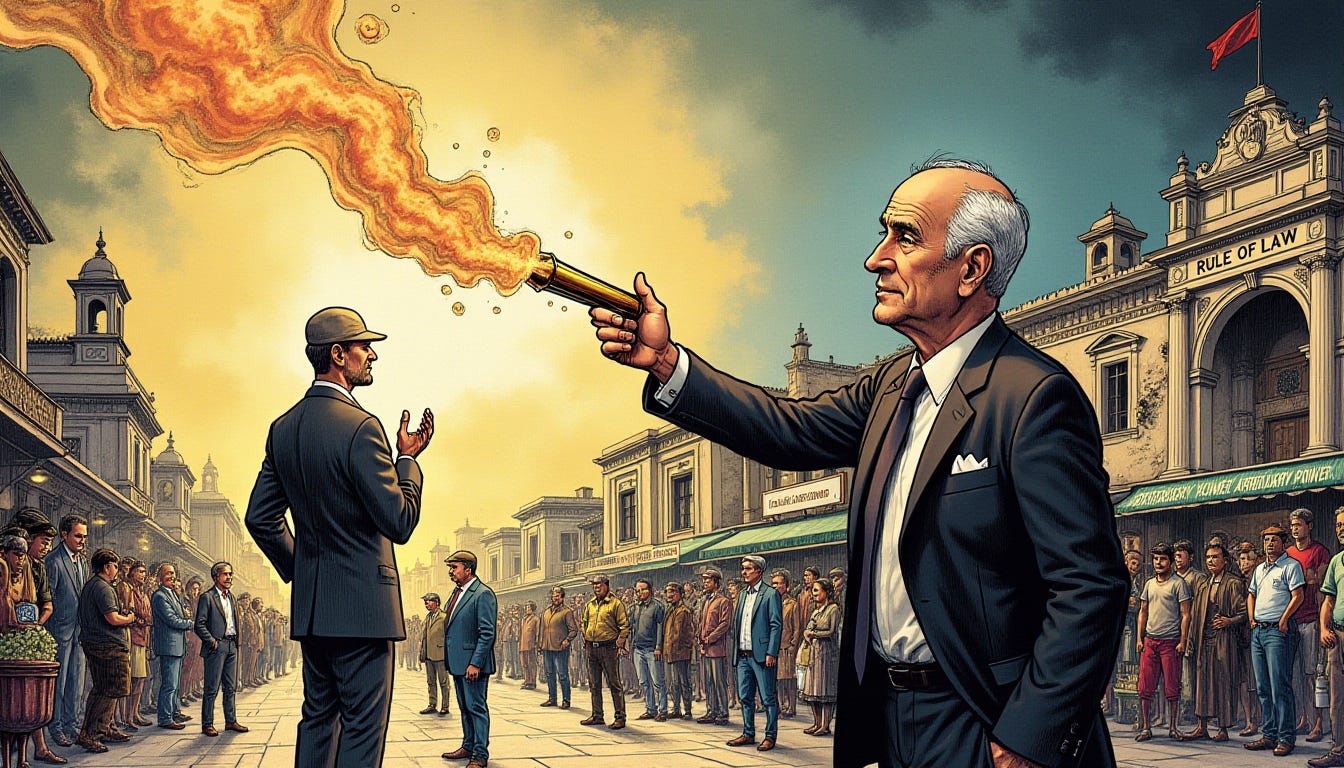
Not a meme‑ready icon, not a YouTube ranter with a chainsaw, but an institutional reformer whose life’s work has been about giving the poor legal personhood and enforceable property rights. That doesn’t make him a messiah; it does make him a far less morally compromised “bandwagon” than the one so many allies just finished riding into a ditch.
Hope in institutions, not in heroes
The first thing to say about de Soto is that he doesn’t rescue the case for putting faith in politicians.
If anything, he’s a reminder of why we shouldn’t: even “our” guy can lose elections—as he did in Peru’s fragmented 2021 presidential race—or be sidelined by coalitions and state‑capacity limits.
The proper object of liberal hope has never been a singular leader, but a framework: rules over rulers, institutions over instincts, constraints over charisma. De Soto’s career has been about that framework—about bringing the poor into the law through the formalization of property and business rights developed in The Mystery of Capital, so they are no longer entirely dependent on the goodwill of mayors, party bosses, or police commanders.
If he succeeds, it won’t be because he is especially pure of heart.
It will be because he managed to convert an intellectual project about “dead capital” into registries, titles, and predictable enforcement that will still be there when he is gone.
Why de Soto feels different from Milei
The contrast with Javier Milei is not just about manners or ideology; it’s about structure.
· Milei is a theorist of shock and a practitioner of exception: sweeping deregulation and fiscal adjustment bundled into omnibus laws and emergency decrees, backed by a willingness to criminalize protest and restrict civic space.
· De Soto is a theorist of incorporation: documenting informal assets and claims, drafting hundreds of pieces of legislation to formalize property and business rights, and setting up agencies to register immovable property and enterprises.
Both talk about markets.
Only one is primarily trying to thicken the rule‑of‑law substrate under which markets can operate without a permanent state of exception.
That’s why de Soto is such a tempting “I told you so” moment for those of us who warned against libertarianism‑by‑strongman.
If we had been more patient, we could have had our Latin American liberal narrative centered on a property‑rights reformer instead of trying to explain away baton‑charges on protesters and presidential attempts to rule by decree.
How to hope without worship
So what does it look like to place hope rightly here?
· Cheer the institutional agenda, not the man.
The victory worth celebrating in Peru is not “de Soto in the palace,” but any concrete expansion of legal personhood, formal titles, and due process for people who previously lived entirely at the mercy of informal mafias and arbitrary bureaucrats.· Watch the constraints, not the speeches.
If de Soto or any successor starts leaning on emergency powers, sidelining courts, or militarizing public order, they should lose liberal support just as fast as Milei should have.· Treat this as an experiment, not a prophecy.
Classical liberals should be brutally honest: the de Soto agenda may fail or be watered down, as critics of his property‑rights program have long argued in other countries. The difference is that if it fails, it will fail within a framework we can still defend on principle.
A better bandwagon
There is a very human urge among intellectuals to have “a country” and “a leader” we can point to and say: that’s us; that’s our project made flesh.
The Milei episode showed how quickly that urge can lead smart people into excusing open illiberalism as a mere means to market ends.
De Soto offers a chance to re‑stage the conversation on healthier terrain.
Here is someone whose central promise is not to smash the system on our behalf, but to make the system legible, general, and fair enough that the poor can finally stand as legal equals. That’s still risky; it’s still politics. But it doesn’t require us to pretend that concentrated power is secretly freedom.
Hope for de Soto, then—but hope in the specific, limited sense liberals should always practice.
Hope that a serious institutional reformer might win enough battles to leave behind sturdier property rights, clearer personhood, and a little less room for the next strongman to play God.